Prefab vs. Stick-Built ADUs: Understanding the Difference
When exploring accessory dwelling unit options, one of the first decisions involves choosing between prefab and stick-built construction. Prefab — short for prefabricated — refers to an ADU that is built in a factory before being delivered to the property. Prefab ADUs fall into two categories: manufactured ADUs (certified by HUD) and modular ADUs (certified by HCD). Stick-built, also referred to as site-built or custom construction, is the traditional approach where the structure is built from the ground up directly on the property.
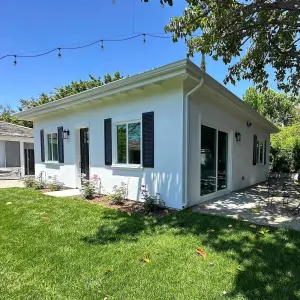
Homeplex offers the Clever ADU line, which consists of modular ADUs certified by the California Department of Housing and Community Development (HCD). These units are constructed using conventional building materials and methods, assembled efficiently in a factory setting, and held to strict quality standards with inspections completed before delivery.
One practical advantage of the prefab approach is time savings. Because the ADU is being built at the factory, site preparation work can happen simultaneously. This parallel process typically saves around 5 to 6 months compared to traditional construction timelines.
Key Features of the Clever ADU
Once a Clever ADU is attached to a permanent foundation, it is classified as real property — federally and statewide approved. Unlike personal property, it remains with the land and can contribute to the overall value of the home.
The Clever ADU line is built to be all-electric, and solar panels can be ordered as an addition, installed directly at the factory. In some cases, local jurisdictions may require solar panels to meet Title 24 energy requirements.
Utilities for the ADU — including water, gas, and electricity — are typically pulled from the main home, and the sewer line must be connected to the home's main sewer lateral. Separate utility services may also be possible depending on the project.
Regarding fire sprinklers: installation may not be required in ADUs where sprinklers were not already required for the primary residence. However, some jurisdictions do require them if the ADU is located more than 150 feet from the street.
Project Costs and Customization
Homeplex offers upgrade options for the Clever ADU, which can be found on their website. However, modifications to floor plans or designs are not available, as the factory process is structured to maintain quality and efficiency.
The starting project price is based on a standard ADU installation, but several factors can increase the overall cost:
- The ADU location requires a crane due to limited access behind the home
- The ADU is situated more than 150 feet from the driveway or street
- The main home's electrical panel needs upgrading to support the new unit
- Demolition or tree removal is required
- Retaining walls are needed for a sloped yard
- Fire sprinklers are required by the local jurisdiction
- A sewer injector pump is necessary due to insufficient slope to the main sewer lateral
For those who want a clearer picture of total project costs, Homeplex can arrange an in-person property visit to assess site-specific requirements before moving forward.