
About Capital Dwelling
Capital Dwelling is a Washington, DC region-based firm that specializes in Accessory Dwelling Units (ADUs) and backyard living spaces. Founded by two Georgetown University graduates with backgrounds in Urban Planning and Real Estate Development, the company brings over 40 years of combined experience in real estate, operations, and project management to every project. Their focus is straightforward: helping homeowners unlock the potential of their properties through well-planned, functional ADU development.
Unlike general contractors or design firms, Capital Dwelling operates as an independent homeowner advisor and representative. They are not tied to any specific builder, architect, or construction method, which means their guidance is objective and centered on what works best for each individual client's needs and budget.
ADU Services and Approach
Capital Dwelling offers a comprehensive range of services covering the full lifecycle of an ADU project, from initial concept through to completed construction. Their work is particularly suited to homeowners in the DMV area — Washington DC, Maryland, and Virginia — where local zoning regulations and permitting processes can be complex and time-consuming.
Their core services include:
- Feasibility assessments and cost estimates — evaluating what is realistically possible on a given property while balancing design goals with zoning requirements and budget
- Permitting and approvals navigation — mapping out the approval process, handling paperwork, and proactively addressing potential challenges to minimize delays
- Custom architectural design — developing concept designs into working documents suitable for permitting, pricing, and construction, with licensed professionals producing architectural plans and drawings
- Project planning and management — coordinating all stakeholders, assembling the right team of suppliers and contractors, and keeping communication clear throughout
- Construction oversight — representing the homeowner's interests to ensure quality standards are maintained while managing costs and timelines
Capital Dwelling works with homeowners who have varying levels of involvement in mind. Whether a client is a busy professional looking for full-service management or someone who wants to act as their own general contractor and simply needs guidance along the way, the firm adapts its role accordingly.
When it comes to construction methods, Capital Dwelling considers all available options. Traditional stick-built construction is common, but prefabricated structures or kit-of-parts solutions may be more appropriate depending on the project scope and budget. Their goal is to find the most straightforward and cost-effective solution that meets the homeowner's needs.
What an ADU Can Be Used For
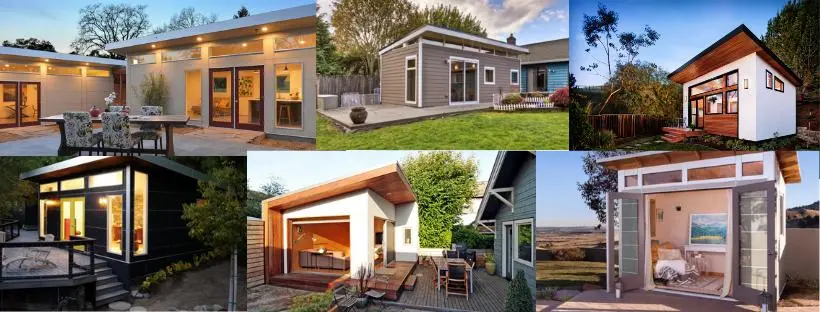
An accessory dwelling unit can serve a wide range of purposes, and Capital Dwelling helps clients think through which use makes the most sense for their situation. Common applications include:
- In-law suite or granny flat for aging parents or adult children
- Rental unit to generate additional income
- Home office or dedicated workspace
- Au pair suite
- Guest accommodation
- Recreation room, home gym, or art studio
- Home classroom
An ADU also offers practical financial benefits. It can increase a property's overall value, generate rental income to offset mortgage costs, or provide flexible short-term rental opportunities. For homeowners thinking long-term, an ADU can support aging in place while keeping family members nearby without sacrificing privacy or independence.
Compared to a traditional home remodel, building a detached ADU or backyard cottage is generally less disruptive. Construction takes place separately from the main residence, allowing homeowners to continue living in their home throughout the process.
Capital Dwelling's specialized focus on ADUs — rather than general construction — means they maintain current knowledge of local zoning changes, design trends, and market developments in the DMV region. Their role throughout any project is to keep the homeowner informed, remove obstacles, and simplify decision-making from start to finish.