
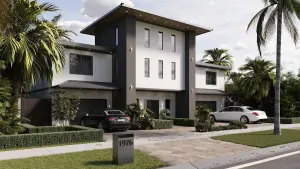
Coastal Haven: ADU Construction and Permitting in Tampa
Coastal Haven is an ADU contractor serving homeowners in Tampa, Florida. Their work covers the full scope of accessory dwelling unit development — from initial zoning checks and Special Use applications through to construction, inspections, and final handover. They operate with an in-house team that manages each phase of the process directly, rather than relying on subcontracted coordination.
One of the first steps Coastal Haven takes with any project is confirming whether a property qualifies for an ADU or an Extended Family Residence (EFR). In Tampa, ADUs are only permitted within specific zoning overlays, including Seminole Heights, Lowry Park, East Tampa, and Tampa Heights. Properties outside these areas may still be eligible for an EFR, provided the unit is occupied by a family member and the primary home is owner-occupied. Coastal Haven uses the city's official ADU overlay map to verify eligibility before any design or planning work begins.
There is an important distinction between an ADU and an EFR. An Accessory Dwelling Unit (ADU) is a self-contained secondary residence with its own entrance, kitchen, bathroom, and sleeping area — and it can be rented to non-family tenants if located within a permitted overlay. An Extended Family Residence (EFR) is structurally similar but restricted to family occupancy and only permitted outside the overlay zones. Both require a Special Use application and must comply with Tampa's zoning regulations regarding size, setbacks, parking, and architectural compatibility.
Permitting, Plans, and the Special Use Process
Every accessory dwelling unit in Tampa must be permitted through the city's Construction Services department. This applies whether the project involves a garage conversion, a detached backyard cottage, or a second-story addition. Required documentation includes architectural plans, site plans, and materials that demonstrate compliance with the Florida Building Code and local zoning ordinances.
Because ADUs and EFRs are classified as Special Uses in Tampa, they are not permitted by right. Each application is reviewed on a case-by-case basis, taking into account setbacks, parking availability, neighborhood compatibility, and parcel-specific conditions. Coastal Haven prepares the full application package — including plans, compliance reports, and contextual documentation — and coordinates directly with Tampa's Development Coordination and Construction Services offices throughout the review process.
All plans must be created and digitally sealed by a Florida-licensed architect or engineer. Coastal Haven handles plan preparation, submittal, and all communication with municipal staff, ensuring the project is ready for permitting without unexpected delays.
Regarding short-term rentals: newly built ADUs and EFRs within Tampa city limits are not eligible for short-term rental use such as Airbnb. These units must be used for long-term occupancy — by a tenant under a lease, a family member, or a caregiver.
Construction Timelines, Flood Zones, and Financial Assistance
The timeline for building a garage conversion contractor project or a detached ADU in Tampa typically ranges from 4 to 8 months. Garage conversions tend to move faster — often 4 to 6 months — while building a new backyard cottage from the ground up may take closer to 6 to 8 months. This includes time for site planning, Special Use approval, architectural design, structural engineering, and city permitting.
For properties located within a Special Flood Hazard Area (SFHA), additional requirements apply. Under Tampa's Code of Ordinances, Section 5-121, new construction within the SFHA must meet specific standards, including:
- Elevating the lowest floor to or above the Base Flood Elevation (BFE) as defined by FEMA
- Using flood-resistant materials for areas below the BFE
- Anchoring structures to prevent flotation, collapse, or lateral movement
- Locating utilities and mechanical systems to prevent flood damage
Coastal Haven assists with elevation certificates and all documentation required for floodplain compliance and insurance purposes.
Several programs may help offset construction costs for eligible homeowners. While none are dedicated exclusively to ADU projects, the following may apply depending on individual circumstances:
- City of Tampa Owner-Occupied Rehab (OOR) Program — for income-eligible homeowners bringing properties into code compliance
- Hillsborough County Owner-Occupied Rehabilitation Program — covering structural, roofing, and safety improvements
- Rebuilding Together Tampa Bay (RTTB) — a nonprofit offering free critical repairs for qualifying homeowners
- State Housing Initiatives Partnership (SHIP) Program — statewide support for affordable housing and home rehabilitation
- USDA Section 504 Loans & Grants — for very-low-income homeowners in eligible rural areas
Coastal Haven helps homeowners identify which programs may apply to their specific project and situation, supporting both the planning and financial preparation stages of ADU development.