ADU Construction Services by Quality Modernizing Services
Quality Modernizing Services (QMS) is an ADU contractor based in Palm Beach County, Florida, offering accessory dwelling unit construction for homeowners looking to expand their property. Their services cover everything from site preparation through to final utility connections, with a focus on compliance with the Florida Building Code (FBC) and local municipal requirements. QMS serves Delray Beach, Boca Raton, and the broader Palm Beach County area.
Their ADU construction process is designed for precision and durability. Each project is coordinated to cover all critical components, including slab and anchoring systems, as well as water, sewer, and electrical installations, to ensure the finished unit is safe, efficient, and ready for occupancy.
The Construction Process: From Site Prep to Structural Framing
The process begins with thorough site preparation and excavation. This includes verifying property boundaries, setbacks, and the approved ADU layout using laser levels and survey benchmarks. The lot is cleared, graded for proper stormwater drainage, and soil is mechanically compacted to meet required bearing capacity. Utility trenches for water, sewer, and electrical conduit are excavated before the slab is formed, with depths maintained according to Florida Building Code standards.
For the foundation and slab, QMS excavates perimeter and interior footings as designed by a structural engineer. Formwork is set to match the building footprint, checked for level and square. A 6-mil polyethylene vapor barrier is installed over compacted base fill, followed by reinforcing steel per structural plans. Utility stub-ups for water, sewer, and electrical are positioned before the pour. Concrete is poured at 3,000–4,000 PSI, mechanically vibrated, screeded, and finished with a trowel and curing compound. A minimum curing period of 3–7 days is observed before framing begins, and a foundation inspection by the local building department is completed prior to continuation.
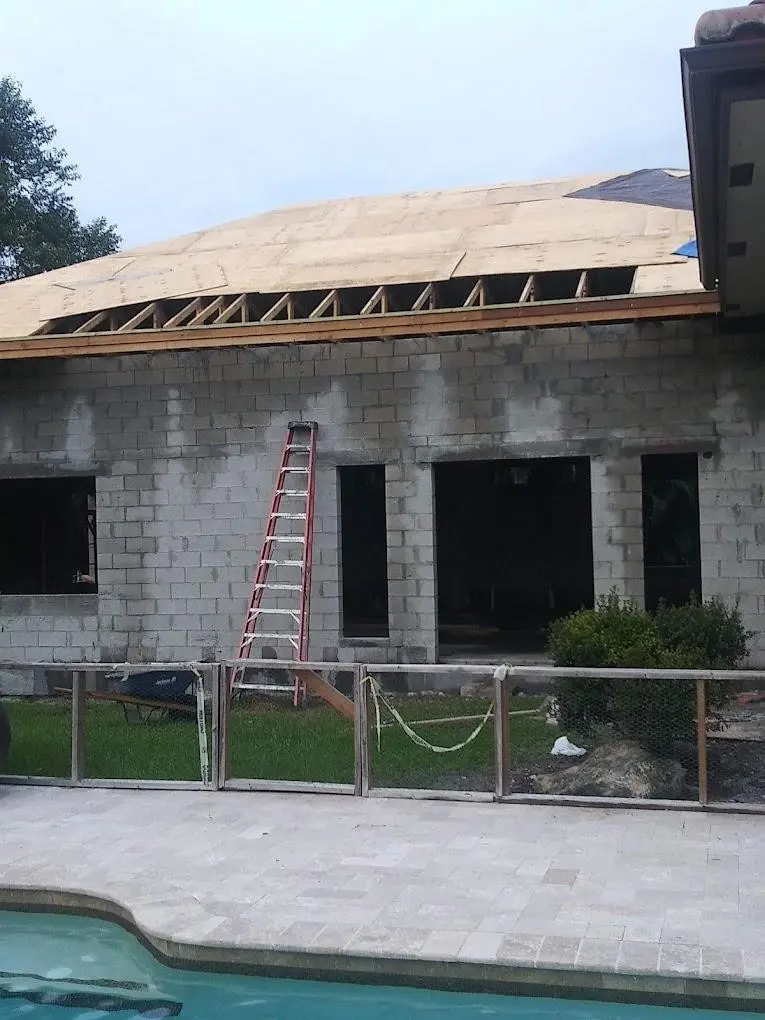
Structural anchoring follows, with galvanized anchor bolts embedded in concrete every six feet and within 12 inches of all corners and openings. Simpson Strong-Tie or equivalent hold-downs are used at shear wall locations per engineering drawings. Pressure-treated sill plates are installed over sill seal gaskets, and wall framing begins once the slab and sill plate are verified level and anchored. Hurricane straps and metal connectors are applied per Florida wind-load design requirements.
Utility Installations: Water, Sewer, and Electrical
QMS handles the full scope of utility work for each accessory dwelling unit they build. For domestic water supply, they connect to the existing municipal water service or private well system, installing a dedicated shut-off valve and backflow preventer. Underground piping uses PVC Schedule 40 or PEX-A tubing at required burial depths, with all lines insulated where necessary. Interior supply lines are pressure-tested to 80 PSI for a minimum of 15 minutes before being covered.
For sanitary sewer connections, the ADU sewer line is connected to the existing home cleanout or municipal tap with a minimum slope of 1/4 inch per foot. Two-way cleanouts and proper venting are installed per Florida Plumbing Code. Water or air testing is performed to verify system integrity before trenches are backfilled.
The electrical installation involves coordination with Florida Power & Light (FPL) or the local utility provider for meter location and service approval. QMS determines whether the ADU requires a separate meter or a sub-feed from the main panel. Underground service uses Schedule 80 PVC conduit at the required burial depth, with a 4-wire system sized according to load calculations. A 100A or 200A main disconnect panel is mounted and grounded per engineer specifications. Branch circuits are run for lighting, receptacles, HVAC, and appliances, with all work verified against the National Electrical Code (NEC 2023) and local amendments.
Once all inspections are passed, QMS backfills and compacts all trenches, verifies water pressure, electrical voltage, and sewer flow, and conducts a full systems integration check. As-built documentation is prepared for both the homeowner and city records, completing the process from ground preparation to a fully functional, code-compliant accessory dwelling unit.