Understanding ADUs and Their Benefits for Boston Homeowners
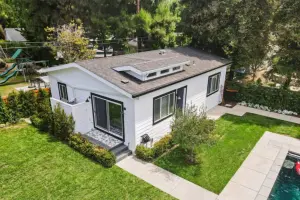
An Accessory Dwelling Unit (ADU) is a self-contained secondary living space located on the same property as a single-family home. These units can take several forms, including basement or attic conversions attached to the main house, garage conversion projects connected to an existing structure, or fully detached ADU builds such as a backyard cottage. Each type typically includes living, sleeping, kitchen, and bathroom facilities.
Boston homeowners are increasingly turning to ADUs for a range of practical reasons. The city faces a well-documented housing shortage, and ADUs offer a way to add housing without requiring new land development. Policy changes in Boston have also made it more feasible to pursue ADU development in single-family and two-family zoned neighborhoods.
There are several notable benefits to building an ADU on a Boston property:
- Additional income: Boston ADUs can generate roughly $1,500–$3,000 in monthly rental income depending on size and location.
- Increased property value: Well-designed ADUs can recover 80–100% of construction costs in added property value.
- Multi-generational living: An in-law suite or granny flat provides independent space for aging parents or adult children while keeping family close.
- Home office or studio: A separate structure can serve as a dedicated workspace, improving work-life balance.
- Environmental benefits: ADUs utilize existing infrastructure and increase urban density, making them a relatively environmentally responsible housing option.
What Boston ADU Builder Offers
Boston ADU Builder works with homeowners across the full range of ADU types. Their services include detached ADU construction, attached additions, basement conversions, garage conversion projects, and attic conversions. Layouts can be configured as studio, one-bedroom, or two-bedroom units depending on the homeowner's goals and site constraints.
Their design team works to ensure that new ADUs complement the existing home's architecture, taking into account materials, rooflines, proportions, and neighborhood character. For properties located in historic districts, Boston ADU Builder has experience working with the Historic District Commission (HDC) to navigate the additional review process, which typically adds one to three months to the overall timeline.
The team also incorporates accessibility features into ADU designs where needed, such as step-free entrances, wider doorways, and accessible bathroom layouts. These features can make a unit suitable for aging in place or for family members with mobility considerations. Additionally, Boston ADU Builder provides 3D renderings and virtual walkthroughs during the design phase, allowing homeowners to visualize the finished space before construction begins.
For homeowners with specific needs — whether optimizing for rental income, creating accessible space for a family member, or building a Casita-style unit — the team customizes interior layouts including kitchen configurations, bathroom design, storage, and living areas.
Permitting, Regulations, and the ADU Process in Boston
The full ADU process in Boston typically takes 8–12 months from initial planning to completion. This includes approximately 2–3 months for design and planning, 3–5 months for permitting and approvals, and 3–6 months for construction. Conversion projects such as garage or basement conversions often have shorter timelines than new detached structures.
Permitting for a Boston ADU generally requires a Building Permit from the Inspectional Services Department (ISD), along with electrical, plumbing, and mechanical permits. Projects requiring zoning variances will need additional relief permits, and properties in historic districts require HDC approval. Boston ADU Builder handles all permit applications as part of their service.
There are several regulatory considerations homeowners should be aware of:
- Size limits: ADUs in Boston are generally capped at 900 square feet or 50% of the primary dwelling's square footage, whichever is smaller. The minimum habitable size is 190 square feet.
- Setbacks: Requirements vary by zoning district. Front yard setbacks are typically 10–20 feet, side yards 5–15 feet, and rear yards 20–30 feet.
- Parking: ADUs under 450 square feet may not require additional parking. Properties within 0.5 miles of public transit may qualify for reduced parking requirements.
- Owner-occupancy: Boston requires the property owner to live in either the main dwelling or the ADU for the life of the permit.
- Property taxes: Adding an ADU will likely result in a property reassessment, though rental income and increased property value often offset the tax increase.
Not all Boston properties qualify for ADU development. Eligibility depends on zoning district, lot size, setback requirements, and existing structures. Boston ADU Builder offers feasibility assessments to help homeowners determine whether their property qualifies and what type of accessory dwelling unit build may be possible.