
Park Model Tiny Homes as an Alternative to Traditional ADU Construction
NW Tiny Homes, based in Portland, Oregon, offers an alternative path for property owners looking to add living space without going through the full scope of traditional construction. Rather than building a site-built accessory dwelling unit from the ground up, the company specializes in park model RV tiny homes, built to ANSI A119.5 standards and RVIA certified. Homes start at $49,900, a figure the company publishes openly rather than keeping pricing behind a sales conversation.
While not technically classified as an ADU — park model RVs fall under vehicle classification rather than dwelling classification — they serve a similar function for many homeowners. In housing legislation, this category is sometimes referred to as an MDU, or Mobile Dwelling Unit. For people comparing options, NW Tiny Homes points out that a typical ADU project can run $200,000 to $400,000 and take around 12 months, whereas their park model homes typically arrive in 8 to 14 weeks.
Because these units generally follow RV regulations instead of full residential building code, placement rules can differ from what applies to a detached ADU or garage conversion. Hookups are standard RV connections for water, electric, and sewer. The company provides a zoning guide covering Oregon and Washington jurisdictions to help buyers confirm placement rules before committing to a purchase.
Models, Customization, and Support
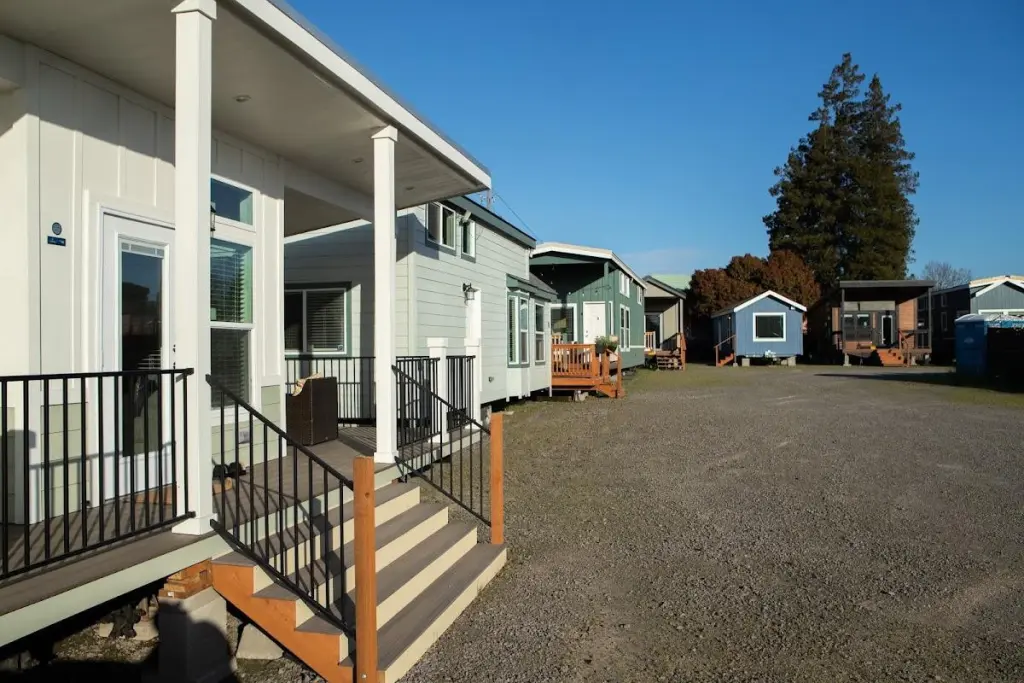
NW Tiny Homes offers eight floor plans, each customizable in terms of flooring, countertops, cabinetry, hardware, and exterior finishes. Models include the Alder, Willow, Hemlock, Maple, and the Lofted Ponderosa, among others, with most on display at the company's Portland lot and several also available to view in Snohomish, Washington.
The company maintains an in-house warranty team rather than relying on third-party contractors for repairs after delivery. This staff handles delivery, setup, and minor post-delivery adjustments such as settling cracks or trim shifts that can occur after a home is transported. The process generally follows these steps:
- Touring a model at the Portland or Snohomish lot
- Choosing a floor plan based on space and budget
- Customizing finishes and layout, with pricing confirmed upfront
- Signing the purchase agreement, with financing available if needed
- Production at the factory, typically 8 to 14 weeks
- Coordinated delivery, leveling, and setup
- Move-in, with ongoing access to the warranty team
Use Cases and Financing
Buyers use these units for a range of purposes beyond a simple backyard guest house, including:
- Downsizing to reduce living costs or mortgage payments
- Housing an aging parent nearby without a lengthy ADU build
- Giving a young adult an independent living space on family property
- Hosting visiting family or friends with added privacy
- Generating rental income
- Creating a dedicated home office or retreat space
For buyers needing financing, NW Tiny Homes works with 21st Mortgage Corporation, though customers are also free to use their own lender. The company notes that because these units are typically titled as RVs and considered personal property rather than real property, they generally do not affect a property's assessed tax value in the way a site-built ADU addition might, though buyers are encouraged to confirm this with their county assessor.
Both the Portland and Snohomish locations are open Wednesday through Sunday for walk-in tours, allowing prospective buyers to view finishes and layouts in person before making a decision.