Daniel Builders and the Growing Interest in ADUs and Tiny Homes
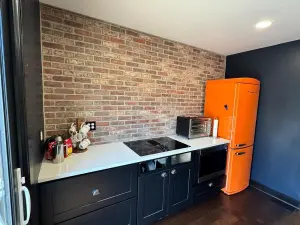
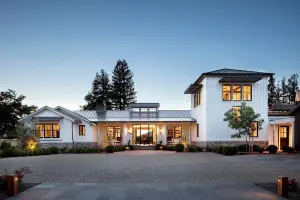
In November 2023, Daniel Builders shared a Facebook post featuring a detached accessory dwelling unit (ADU) that quickly gained significant attention — accumulating over 2,000 likes within days. The post sparked widespread curiosity about ADUs and tiny homes, prompting a closer look at what these structures are, how they differ, and what goes into designing and building them.
To shed some light on the subject, architect Billy Zion of Zion Architects — who designed the ADU featured in the post — offered insight into the world of smaller dwellings. Daniel Builders, a licensed builder based in South Carolina, works with architects like Zion to bring these projects to life for clients in the Greenville and Anderson areas.
Understanding ADUs, Tiny Homes, and Guest Houses
Terms like ADU, detached ADU, guest house, pool house, and tiny home are often used interchangeably, but there are some practical distinctions worth noting:
- Tiny homes are typically 500–600 square feet or less and originated as mobile structures, offering flexibility for those who want to relocate.
- Detached ADUs and guest houses tend to be closer to 1,000 square feet and generally include standard amenities such as a kitchen, bedroom, bathroom, and living space.
- As square footage increases toward the 1,000-square-foot range, the mobility feature common to tiny homes is largely lost.
The ADU featured in Daniel Builders' post was built on a permanent foundation, which is a common approach for accessory dwelling units intended to serve as long-term living spaces on a property.
According to Billy Zion, in a recent year he designed approximately 4–5 tiny homes averaging around 800 square feet, along with 3–4 detached ADUs, guest houses, and pool houses ranging from 1,000 to 1,200 square feet.
Challenges in Designing and Building Smaller Dwellings
Designing a detached ADU or tiny home comes with a specific set of challenges that both the architect and builder must navigate carefully:
- Space visualization: Clients transitioning from larger homes — often 3,000 to 4,000 square feet — may struggle to understand what living in a smaller space actually feels like. 2-D and 3-D drawings are commonly used to help clients visualize the finished space.
- Site adaptation: Every location has its own zoning rules, grading considerations, weather factors, and neighborhood association requirements. These all influence how a structure can be designed and placed on a given lot.
- Matching existing structures: When a detached ADU is added to a property, most homeowners want the new structure to complement the existing home aesthetically. Review boards and HOAs often have requirements around this as well.
When it comes to cost, pricing for these smaller dwellings varies considerably. Factors such as the number of occupants, desired amenities, and level of finish all play a role. According to Zion, costs can range from as low as $100 per square foot on the modest end to $700,000 and above for more customized, high-end builds. Cabinetry, in particular, often requires significant customization given the space constraints involved.
It's also worth noting that while Daniel Builders operates as a licensed South Carolina builder — serving areas like Greenville and Anderson — the interest generated by their ADU post reached well beyond state lines. As a licensed builder, their services are geographically limited to South Carolina, though the architectural side of these projects can sometimes be handled remotely depending on the scope of work.
For those in the Greenville or Anderson, South Carolina area considering a detached ADU, backyard cottage, guest house, or tiny home, Daniel Builders offers a starting point for exploring what's possible on a given property and budget.