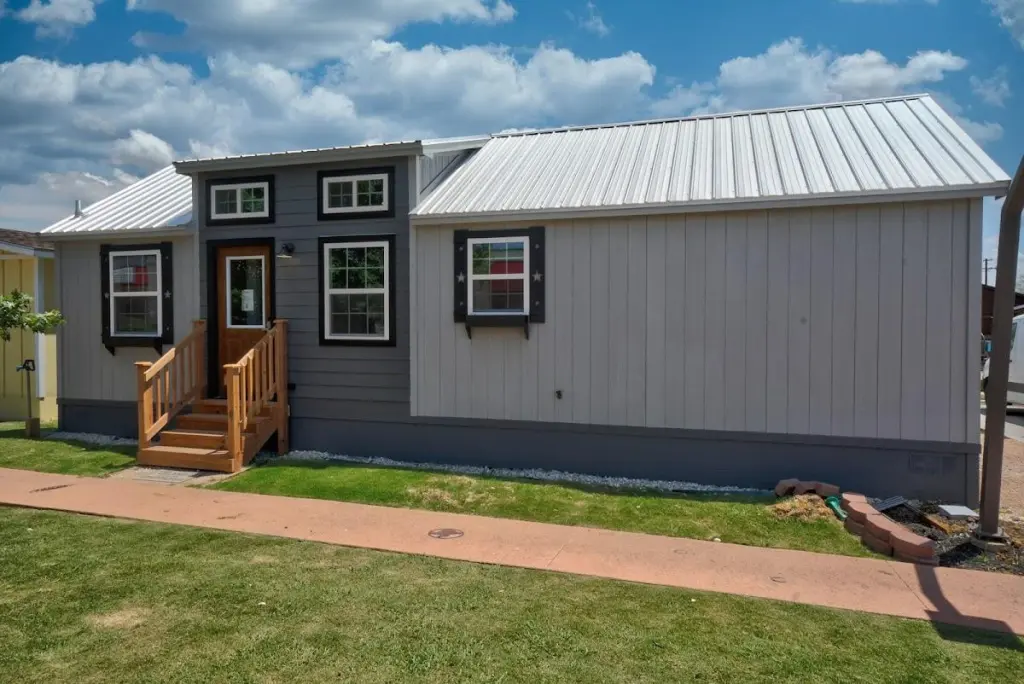
Accessory Dwelling Units: What Leland's Cabins Offers
Leland's Cabins provides accessory dwelling unit (ADU) solutions for homeowners looking to add livable space to their property. Whether the goal is to house aging relatives, provide affordable housing for a college student, generate rental income, or simply increase property value, an ADU can be a practical option worth considering.
Current housing trends have pushed many homeowners to explore ADUs as a way to address affordability challenges. A 2020 Porch Survey found that homes with an ADU showed a median resale value increase of around 45% compared to homes without one. That said, results vary depending on location and local market conditions.
Leland's Cabins works with clients on both site-built ADUs and factory-built (modular prefab) ADUs, each with its own set of advantages and limitations.
Site-Built vs. Factory-Built ADUs
Site-built ADUs — also referred to as stick-built ADUs — are constructed entirely on your property. This method offers more design flexibility, including the ability to match existing structures using materials like stone, brick, or masonry. The trade-off is a longer build time compared to factory-built options.
Factory-built modular ADUs are assembled offsite and delivered to your property, either lifted by crane or mounted on-site. These units typically have a shorter lead time and can be more affordable than site-built alternatives. However, they offer less flexibility in design due to transportation requirements. Most modular prefab ADU manufacturers offer studio, one-bedroom, or two-bedroom configurations, along with choices in flooring, roofing, exterior cladding, and interior finishes.
It's important to verify local building codes before choosing either option. Some areas require a modular certification for factory-built units, while others may accept HUD-labeled units. Requirements vary significantly by state, county, and city — including size allowances, which can range from under 500 square feet to over 1,100 square feet depending on jurisdiction.
When evaluating any ADU builder or prefab cabin supplier, it's worth asking directly:
- Is the unit built to residential codes (IRC) adopted by your state?
- Is the builder registered as a certified modular or HUD builder with your state?
- Can they clearly identify which building codes the unit is constructed to?
ADU Features and Accessibility
Leland's Cabins also addresses the need for handicap-accessible ADUs. Even within a compact footprint, features such as grab bars, proper wheelchair turning radiuses, and accessible vanities and sinks can be incorporated into the design. This is particularly relevant for families housing elderly parents or relatives with mobility needs.
ADUs from Leland's Cabins are considered stationary tiny homes — a legal housing classification built to certified residential codes. Unlike tiny homes on wheels, stationary ADUs offer more design flexibility and are built to the same residential standards as a primary dwelling. Customization options include cabinetry, flooring, and other interior finishes.
For those considering a shed-to-home conversion as an ADU alternative, it's essential to confirm that the structure is framed and built to the residential codes adopted in your state. Not all storage buildings meet these standards, and using a non-code-compliant structure as a living space can result in fines or removal orders from local building officials. Leland's Cabins encourages buyers to do their research and ask the right questions before committing to any prefab ADU purchase.
In summary, Leland's Cabins offers a range of ADU options — from backyard cottage builder services to in-law suite and granny flat solutions — with an emphasis on code-compliant construction and practical customization for the homeowner's specific needs.