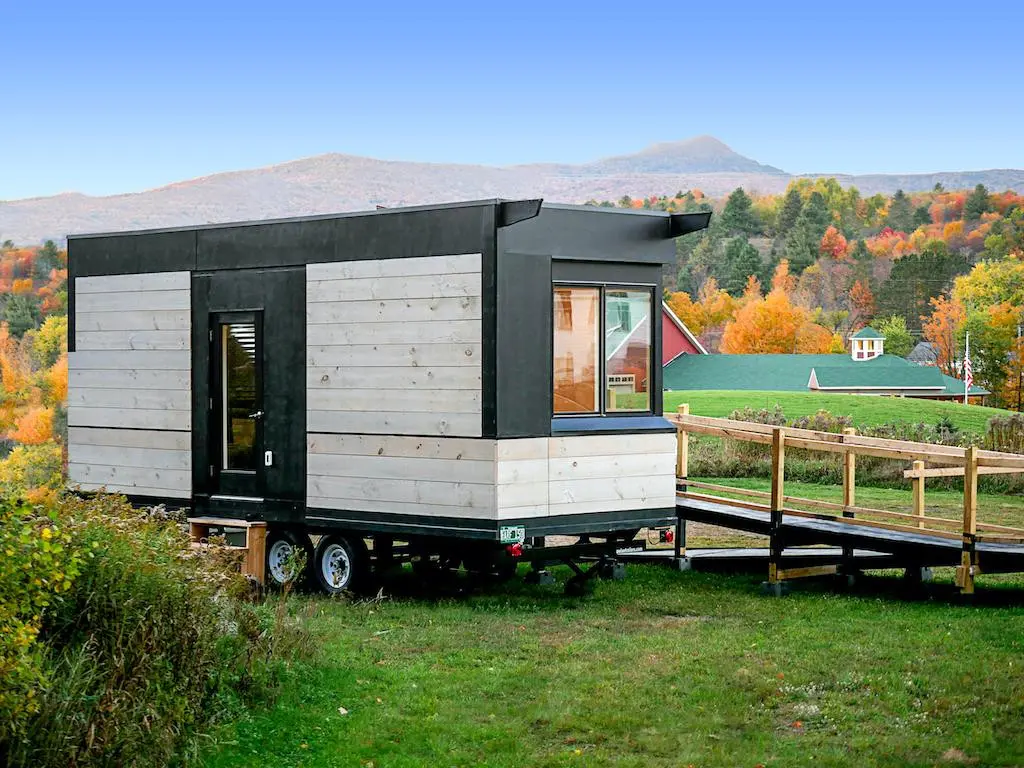
About WheelPad and Its Accessible Dwelling Units
WheelPad is a Vermont-based company that manufactures Personal Accessible Dwellings, or PADs — compact, factory-built modular units designed to provide accessible living quarters for people with mobility challenges. Their product line functions as an accessory dwelling unit solution, offering structures that can attach to an existing home or stand alone in a backyard, making them relevant to anyone exploring ADU options for a family member or loved one.
WheelPad's origins trace back to a series of business plan competitions and academic partnerships. A collaboration with Norwich University in Vermont led to the construction of their first prototype, known as +Add PAD. Students at Norwich gained hands-on experience building the unit, and a $10,000 grant from VSECU helped fund the construction. That prototype has since been donated for ongoing use by Windham County residents in need. The +Add PAD eventually evolved into the current SuitePAD model. A subsequent partnership with Norwich produced the first SuitePAD XL, built for a veteran in northern Vermont who required a wider structure to accommodate a queen-sized bed.
WheelPad currently manufactures its StudioPAD and SuitePAD models in Vermont, and also contracts with other manufacturers to meet demand. Their manufacturing facility in southern Vermont continues to grow.
WheelPad's Product Models
WheelPad offers several models, each designed to surpass ADA compliance standards. All units are factory-built, which helps avoid on-site construction delays and allows for quicker installation.
- SuitePAD: Exterior dimensions of 24'6" long by 8'6" wide, with just over 178 square feet of interior space. It features 8'3" ceilings and can be attached to an existing home or placed as a backyard cottage. It is transportable by a heavy-duty pickup truck without special licensing.
- StudioPAD: Slightly longer at 28', maintaining the 8'6" width. The additional space allows for an accessible kitchen, and it can stand alone in a backyard for greater independence.
- SuitePAD XL: Wider at 12' by 20', this model easily fits a queen-sized bed and can include a kitchenette. It does not come on wheels and requires a licensed hauler for transport. It can stand alone or attach to an existing building.
- MultiPAD: An approach that combines multiple SuitePAD units into a single universally accessible apartment-style building.
Custom sizes and features are also available. Each model includes a Sure Hands® ceiling hoist track running from the sleeping area to the bathroom, with a safe working load of up to 440 pounds. Other accessibility features include a roll-in shower, swing doors, hygienic rounded bathroom flooring corners, and a built-in ramp option for independent outdoor access. Switches and outlets are integrated into a clean aesthetic with plaster walls, natural wood wainscot, and zinc-coated steel panels.
The SuitePAD was designed by architect Joseph Cincotta of LineSync Architecture in collaboration with Riley Poor, who lives with tetraplegia. Additional advisors include individuals living with quadriplegia and paraplegia, ensuring the design reflects real-world accessibility needs.
Installation, Zoning, and Utilities
Installing a SuitePAD requires approximately 30' by 12' of flat land adjacent to or behind the home. The unit connects to the host home's existing mechanical systems — electric, water, and wastewater. Each SuitePAD is powered by a 50-amp power source from the primary residence, and a solar PV panel hook-up is available as a customization option. Plumbing connection to the host house typically takes a plumber around 4–5 hours.
Because a SuitePAD sits on a mobile frame, it may qualify as an RV in some jurisdictions, which can affect local zoning considerations. WheelPad assists customers in navigating any interim use permits or qualifications required. In Connecticut, Senate Bill 922 passed in 2018 allows municipalities to issue permits for temporary health care structures on single-family residential lots.
Installation can be either temporary or permanent. Temporary installations leave a fully repairable footprint. Permanent options include helical pier or concrete foundations. If the unit is removed, the outdoor deck area can be converted into a patio and ramp that continues to serve the main residence.
WheelPad's PADs are intended for a range of users — from individuals recovering from spinal cord injuries to those requiring hospice care or long-term mobility assistance — providing a practical option for families looking to keep loved ones close while maintaining privacy and independence.