
Lindal Homes: ADU and DADU Design Solutions
Across the United States and Canada, there is a growing demand for accessory dwelling units (ADUs) and detached accessory dwelling units (DADUs). Lindal Homes, through its network of independent distributors, has been responding to this trend by offering custom-designed kit homes suited to a range of ADU applications.
An ADU or DADU is a secondary living space built on the same property as an existing single-family residence. These units can be fully detached, built above a garage, or connected to the main home via a breezeway. They are particularly common in dense urban areas, where they help address housing affordability, reduce traffic congestion, and offer flexible living arrangements for homeowners.
Common reasons homeowners consider building an ADU or backyard cottage include:
- Providing a separate living space for adult children
- Accommodating family or friends during extended visits
- Creating a private workspace or hobby area
- Generating rental income or listing the unit on platforms like Airbnb
- Increasing overall property value
Lindal's Approach to ADU Design
Lindal's home design system is built around flexibility. The company offers a range of floor plans and architectural styles, making it possible to design an ADU, DADU, studio, or backyard guest house that complements the existing primary residence while meeting local zoning and permitting requirements.
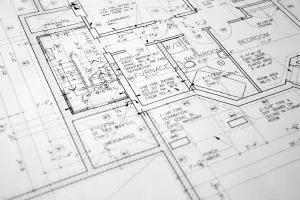
Rather than starting from scratch, clients are encouraged to explore Lindal's existing plan books and mix and match components from the Lindal Elements collection. This approach tends to be more cost-effective than fully custom design. That said, Lindal designs can be modified to suit specific site conditions and client preferences.
It is worth noting how costs are typically distributed in a Lindal project. The design and materials package from Lindal accounts for roughly 40% of the total project cost. The remaining 60% covers construction labor and site-related expenses, including foundation work, plumbing, electrical, insulation, and finishes.
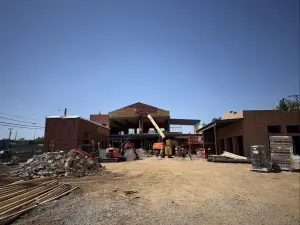
Once a building permit is obtained and materials arrive on site, the weather-tight shell of a Lindal home can be assembled relatively quickly, as all components and hardware are delivered together.
A Real-World ADU Example in Seattle
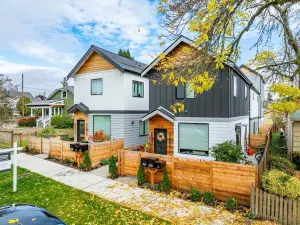
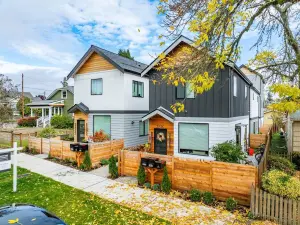
Seattle Cedar Homes, a Lindal dealership based in Seattle, Washington, has completed several ADU and DADU projects in the area. One notable example involved designing an 800 square foot detached backyard cottage for a couple who wanted a separate living space for their adult son.
The design was based on the Lindal Elements Birch 747 floor plan, modified so that the upper floor overhangs the lower level. This approach allowed for two bedrooms and a full bathroom on the second floor, while also creating a covered porch entry at ground level — all while keeping the building's footprint within the city's allowable lot coverage limits.
A neighboring household, after learning about the project, commissioned a similar DADU for use as either a rental unit or housing for their own adult sons. Both projects were coordinated to share contractors for excavation, concrete work, and framing, helping to reduce overall costs. The two projects used different exterior materials — one opted for cement board siding, vinyl windows, and a composite roof, while the other chose metal siding, aluminum-clad windows, and a metal roof — resulting in noticeably different final costs.
Seattle Cedar Homes is the only Lindal dealership owned directly by Lindal Homes and is located at the company's corporate headquarters in Seattle. Their team works with clients through the design process, taking into account budget, site conditions, schedule, and local building codes. Clients receive an engineered and stamped set of plans ready for permit submission.
For those considering an ADU, DADU, granny flat, in-law suite, or backyard cottage, Lindal's system-built approach offers a structured path from initial design through to construction completion.