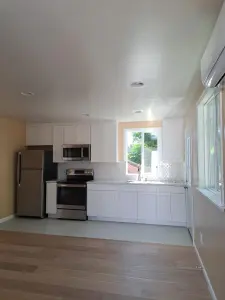
ADU Construction Services by Hamilton Exteriors
Hamilton Exteriors is a Bay Area-based contractor offering accessory dwelling unit (ADU) construction services across six counties: Alameda, Contra Costa, Marin, Napa, San Mateo, and Santa Clara. Their crews operate out of Castro Valley, placing them within reach of 47 cities from Oakland to San Jose. They hold CSLB License #1078806 and carry $2M general liability insurance, workers' compensation, and bonding per California law.
ADU construction has become one of the Bay Area's most active housing categories, with over 4,000 ADU permits issued across the five-county region in 2024 according to the California Department of Housing and Community Development. Hamilton Exteriors builds three types of ADUs:
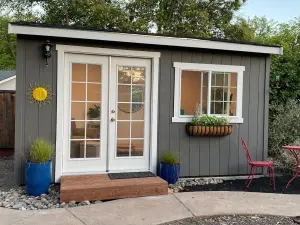
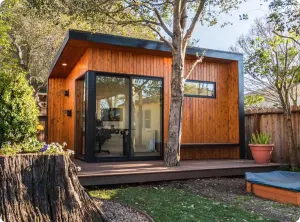
- Detached ADU — standalone backyard structures ranging from 400 to 1,200 square feet
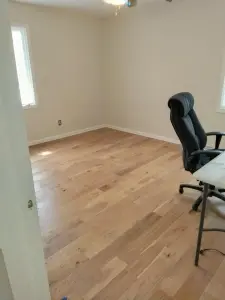
- Garage Conversion — converting an existing garage into a fully finished living space, generally the most cost-effective option
- Junior ADU (JADU) — constructed within the footprint of the existing home, up to 500 square feet
California's AB 68 and SB 9 legislation has removed many of the local barriers that previously complicated ADU construction, including minimum lot size requirements, owner-occupancy mandates, and parking replacement rules for garage conversions. It's also worth noting that AB 670 limits HOAs from outright banning ADUs on single-family lots, though HOAs may still impose reasonable design standards around materials, colors, and setbacks.
The ADU Construction Process
Hamilton Exteriors structures their ADU projects across four defined phases, all covered under a single fixed-price contract:
- Feasibility and Design — 3 to 6 weeks, including site assessment, architectural plans, and 3D renderings
- Engineering and Permitting — 6 to 10 weeks, covering structural engineering, Title 24 energy calculations, and soils reports, backed by a 60-day permit guarantee
- Site Preparation — 1 to 2 weeks of grading, utility trenching, and foundation preparation
- Construction — 8 to 16 weeks depending on ADU type, from foundation through final inspection
Total project timelines typically run between 5 and 9 months. Garage conversions tend to move fastest, while detached ADUs on hillside lots take the longest. Every ADU is engineered to Seismic Design Category D standards with site-specific foundation designs based on geotechnical data.
Bay Area ADU construction involves navigating regulations that vary not just by city but sometimes by neighborhood. In Oakland, properties in the S-7 Preservation Combining Zone face additional design review. In Fremont, the Warm Springs and Irvington districts have specific ADU guidelines. San Francisco's streamlined ADU permitting applies to buildings with 1–4 units, but RH-1 zoned properties still face density calculations affecting maximum ADU size. Contra Costa County's unincorporated areas may require private well and septic assessments. Hamilton Exteriors manages the full permit process — application, plan submission, and inspection scheduling — for each jurisdiction they serve.
Financing and Property Value Considerations
Bay Area homeowners building ADUs can expect to add roughly $150,000 to $300,000 in property value, with rental income typically ranging from $2,000 per month for a studio unit to $3,500 or more per month for a two-bedroom, depending on location, size, and finishes.
Hamilton Exteriors offers several financing options, including $0-down financing with approved credit, 12-month same-as-cash plans, and extended terms up to 15 years for larger projects. They also work with homeowners exploring HELOCs, construction loans, and the CalHFA ADU Grant Program, which provides up to $40,000 in grant funding. Payment is structured around completed, inspected work — not collected upfront in full.
For properties located in WUI fire zones such as the Berkeley Hills, Oakland Hills, or parts of Marin, Hamilton Exteriors ensures compliance with local fire-rated material requirements. Permit fees are listed as a separate line item in project estimates, so homeowners can see all costs clearly before work begins.