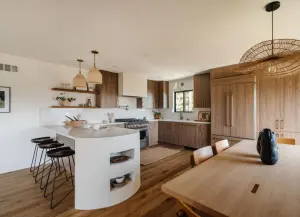
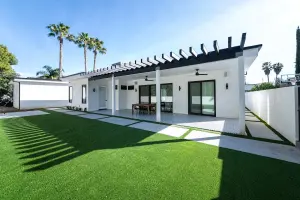
ADU Design Homes: Full-Service ADU Design and Build
ADU Design Homes is a full-service ADU design and build firm serving residential properties across Los Angeles and Orange County. Their integrated approach brings together architecture, engineering, permitting, and construction under one roof, offering homeowners a more streamlined path through what can otherwise be a complex process.
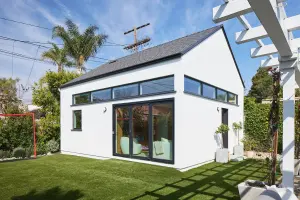
They work on a range of accessory dwelling unit types, including detached ADUs, attached units, JADUs (Junior Accessory Dwelling Units), and garage conversions. For homeowners exploring prefabricated options, they also offer factory-built ADU models with defined base pricing, providing a clearer starting point for budgeting.
Services Offered
ADU Design Homes covers the full project lifecycle, from initial consultation through to final handoff. Their core services include:
- Consultation and Site Evaluation: An initial review of the homeowner's needs, budget, and timeline, followed by a property assessment covering zoning compliance, feasibility, and site constraints. Based on this, they recommend the most suitable ADU type — whether that's a detached ADU, attached unit, garage conversion, or internal conversion.
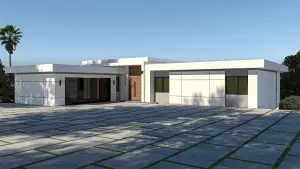
- Architectural Design and Drafting: Custom ADU designs developed in line with local ordinances, including 2D and 3D renderings, floor layouts, and interior space planning.
- Structural and Civil Engineering: Foundation and framing plans, load-bearing and seismic analysis, and utility connection planning covering water, sewer, gas, and electrical systems.
- Permitting and Regulatory Approvals: Preparation and submission of all required documentation, coordination with city planning departments, and compliance with building codes, Title 24 energy standards, and fire safety requirements.
- Project Management: End-to-end oversight from pre-construction through final inspection, including timeline and budget tracking and coordination of subcontractors and specialty trades.
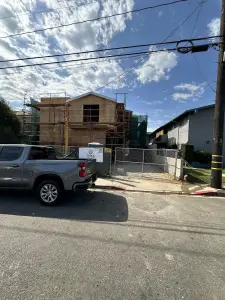
- Construction and Buildout: Site preparation, grading, foundation work, framing, roofing, insulation, drywall, and all interior finishes including flooring, cabinetry, lighting, and appliances. Exterior work such as landscaping, fencing, and paint is also included.
- Utilities and Systems Integration: HVAC installation, electrical and plumbing systems, and optional solar panel integration.
- Final Inspection and Client Handoff: A walkthrough and quality assurance process, resolution of any outstanding punch list items, and delivery of keys, manuals, and warranty documentation.
Beyond the core build process, ADU Design Homes also offers feasibility studies and ROI analysis for homeowners considering rental income potential, smart home technology integration, green building strategies using LGS panelization, and support with financing and loan coordination.
Understanding ADU Project Costs
ADU Design Homes provides a cost calculator tool to help homeowners get a preliminary sense of project expenses. It's worth noting that these figures are projections only — actual costs depend on a range of variables including ADU type, construction method, location, finish quality, permit complexity, land elevation, and the condition of any existing structure in the case of conversions. A formal feasibility assessment and site visit are required before final costs can be determined.
The calculator allows users to select an ADU type, input the planned square footage, and choose a finish level — basic, mid-range, or high-end. This gives a rough estimate covering construction, permits, and utilities, which can be useful for early-stage planning and financing conversations.
For homeowners looking to secure financing or loans, having a realistic cost estimate is an important step. Lenders generally respond better to well-documented, accurate budgets, and ADU Design Homes offers support in navigating that process alongside the design and construction work.
Their process follows a defined sequence: Discovery Call → Pre-Design → Construction Documents → Permit Phase → Construction Approval. This structured approach is intended to keep projects organized and reduce the likelihood of unexpected delays or costs along the way.