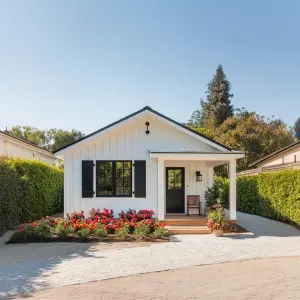
ADU Construction with Trusst Construction
Building an accessory dwelling unit is rarely as straightforward as it first appears. Rather than simply adding space to a property, constructing an ADU is closer to solving a site puzzle. The unit may be smaller than a primary residence, but the decisions surrounding it are often more constrained. An ADU has to fit within an existing property that already has its own limits — utilities are in place, access is defined, drainage behaves a certain way, and setbacks already exist. None of that resets just because a second structure is being added.
Trusst Construction is a design-build contractor that treats ADU building as full construction work. Whether the project involves a detached ADU, a garage conversion, an in-law suite, or a backyard cottage, the same level of planning and execution is applied across the board.
Why Planning Matters Before Construction Begins
Most problems on ADU projects do not come from poor workmanship. They come from planning assumptions that do not hold up once work begins. A layout that looks good on paper may conflict with utility routing. A location that seems logical may restrict access for construction equipment. A design that meets size requirements may still create issues with privacy or drainage.
Because an ADU does not get a blank site, every decision depends on what is already there. Trusst Construction begins with observation rather than assumptions. Before layouts are finalized, they study how the property behaves — where water collects after rain, how utilities are currently routed, how access works for people and equipment, and how the main residence is occupied. Only after these details are understood do design and system decisions move forward.
Every ADU also inherits the behavior of the property it sits on. That includes soil conditions, grading, water movement, and how the primary residence is used. Some properties have limited space for foundations. Some have drainage paths that cannot be altered easily. Some require narrow access routes that affect scheduling. Addressing these realities early avoids delays and expensive corrections later.
An ADU is not isolated from the main home — it interacts with it daily. Noise transfer, privacy, and utility demand all matter. If these relationships are not considered carefully during planning, both spaces can suffer. Thoughtful ADU planning protects the main home while allowing the new unit to function independently.
Utility Coordination, Scheduling, and Materials
Utilities often determine whether an ADU performs well or struggles. Electrical systems must handle additional load without instability. Plumbing must maintain pressure and drainage efficiency. Ventilation must function independently. When utility planning is rushed, construction pauses while solutions are redesigned. Coordinating these systems early prevents that disruption.
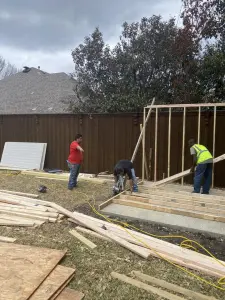
ADU construction sites are often compact, with less room for materials, fewer staging options, and limited flexibility for overlapping trades. Poor sequencing causes congestion, missed inspections stall progress, and late material deliveries create downtime. Trusst Construction plans schedules carefully to keep work moving without unnecessary overlap.
Material selection is also treated as a practical decision. ADUs are used daily — whether occupied by family members, tenants, or guests — and the space must hold up under real use. The focus is on stability, durability, and ease of upkeep rather than materials that depend on thin coatings or frequent maintenance.
Not every ADU is built for the same purpose. Some are intended for long-term rental. Some house family members. Some provide flexible living space that may shift in use over time. Each intended use affects layout, privacy, and system planning. Trusst Construction tailors decisions to how the space will actually be used, rather than applying a one-size-fits-all approach.
Trusst Construction serves homeowners looking for an ADU builder, granny flat builder, JADU contractor, or Casita builder who can manage the full scope of the project — from early site assessment through construction completion. Their approach emphasizes early clarity and disciplined execution, with the goal of reducing surprises once construction begins and protecting the overall investment.