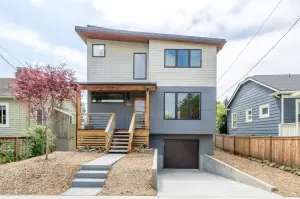
Seattle ADU Laws and What They Mean for Homeowners
In the summer of 2019, the Seattle City Council voted unanimously to make it easier for homeowners to permit, design, build, and rent accessory dwelling units (ADUs). The updated rules relaxed several previous restrictions and allowed for larger and taller detached ADUs (DADUs). Model Remodel has long viewed ADUs as a practical solution to affordable housing in a rapidly growing city, and these regulatory changes opened up more opportunities for homeowners looking to add living space to their properties.
For homeowners who are unsure whether their property is a candidate for an ADU, Model Remodel's Client Services team can visit the site and help assess project feasibility.
Common Questions About Building an ADU in Seattle
Do I need a permit to build an ADU in Seattle?
Yes. ADUs must meet current standards across multiple Seattle codes, including residential, building, mechanical, electrical, energy, land use, environmentally critical areas, and shorelines codes. The type of permit required depends on the type of ADU being built. Details can be found on the SDCI Accessory Dwelling Unit website.
How do I know if my property is zoned for an accessory dwelling unit?
In Seattle, accessory dwelling units can be built on single-family lots (SF5000, SF7200, and SF9000), Residential Small Lot (RSL), or lowrise (LR) zones, and in some cases within neighborhood or commercial zones. Rules and requirements vary by zone. As part of their process as an ADU builder, Model Remodel begins by determining project feasibility with the city.
Can a garage be converted into an accessory dwelling unit?
Yes. Garage conversions are a common approach to creating ADUs. Both attached and detached garages can be converted, and it is also possible to build an ADU above an existing garage. Above-garage units make use of existing structure and offer flexibility if the intended use of the space changes over time. Model Remodel works as a garage conversion contractor on projects like these.
How large can an ADU or DADU be?
Seattle code currently limits the size of an ADU or DADU to no more than 50% of the main home's square footage. For example, a 1,500 square foot primary home would allow for an ADU of up to 750 square feet.
How many people can live in an accessory dwelling unit?
The total number of residents across both the primary home and any accessory unit is typically limited to 8 or 12, depending on the lot size and number of ADUs present. Exceptions may apply for relatives.
Are there off-street parking requirements for ADUs?
Not currently. Previous code required off-street parking for ADUs, but those requirements were removed in the most recent round of Seattle ADU ordinances.
ADU Terminology and Costs
Terms like backyard cottage, carriage house, granny flat, and casita are all commonly used to describe ADUs or DADUs. Some terms, like She Shed or Man Cave, refer to accessory structures built as personalized retreats rather than full residential units. By contrast, an accessory non-dwelling unit — such as a shed or garage — is not intended as a residence and does not need to meet the same requirements as a livable ADU.
The cost of building an ADU depends on several factors, including whether it is attached or detached, the condition of existing systems, materials selected, and design complexity. Building an ADU requires all the same elements as a larger home, just within a smaller footprint. For a brand new detached ADU, Model Remodel typically finds the investment starts at around $350,000. Attached ADUs generally require a lower investment.